Lokstadt Raised Beds
Raised beds for Lokstadt
Together for a greener, safer and more vibrant Lokstadt
With raised beds, we want to make Lokstadt even more liveable. The beds bring more greenery into public spaces, create places for neighbours to meet, and help calm traffic and improve safety.
To make this project a success, we’re looking for committed residents and local businesses who would like to get involved—either by contributing financially to the purchase or by taking care of a raised bed.
Join in!
As a first step, we’re collecting everyone who’s interested. If you can imagine helping design a raised bed, taking care of it, or supporting it financially, we’d be happy to receive your entry in the form below.
Together, we’ll create more greenery for Lokstadt!
Costs
- Procurement of raised beds: funded by Implenia
- Filling with soil and plants per raised bed: approx. 250.–
- ZHAW funding: 1000.–

Implementation
- Procurement and joint filling and planting of the raised beds on Saturday, September 26, 2026, 10 AM–2 PM at Dialogplatz
- Subsequent distribution of the raised beds to the planned locations
- Raised beds will be installed where a responsible person or group can be found to take care of them
Who is responsible for what?
Living Lab Lokstadt
- Assembly, filling and planting of the raised beds with all interested residents on
Outdoor greening group of the Krokodil
- Coordination and support for maintenance and management
Residents and local businesses
- Care and maintenance of a raised bed (commitment for one year)
We look forward to many people getting involved and to making Lokstadt even greener together.
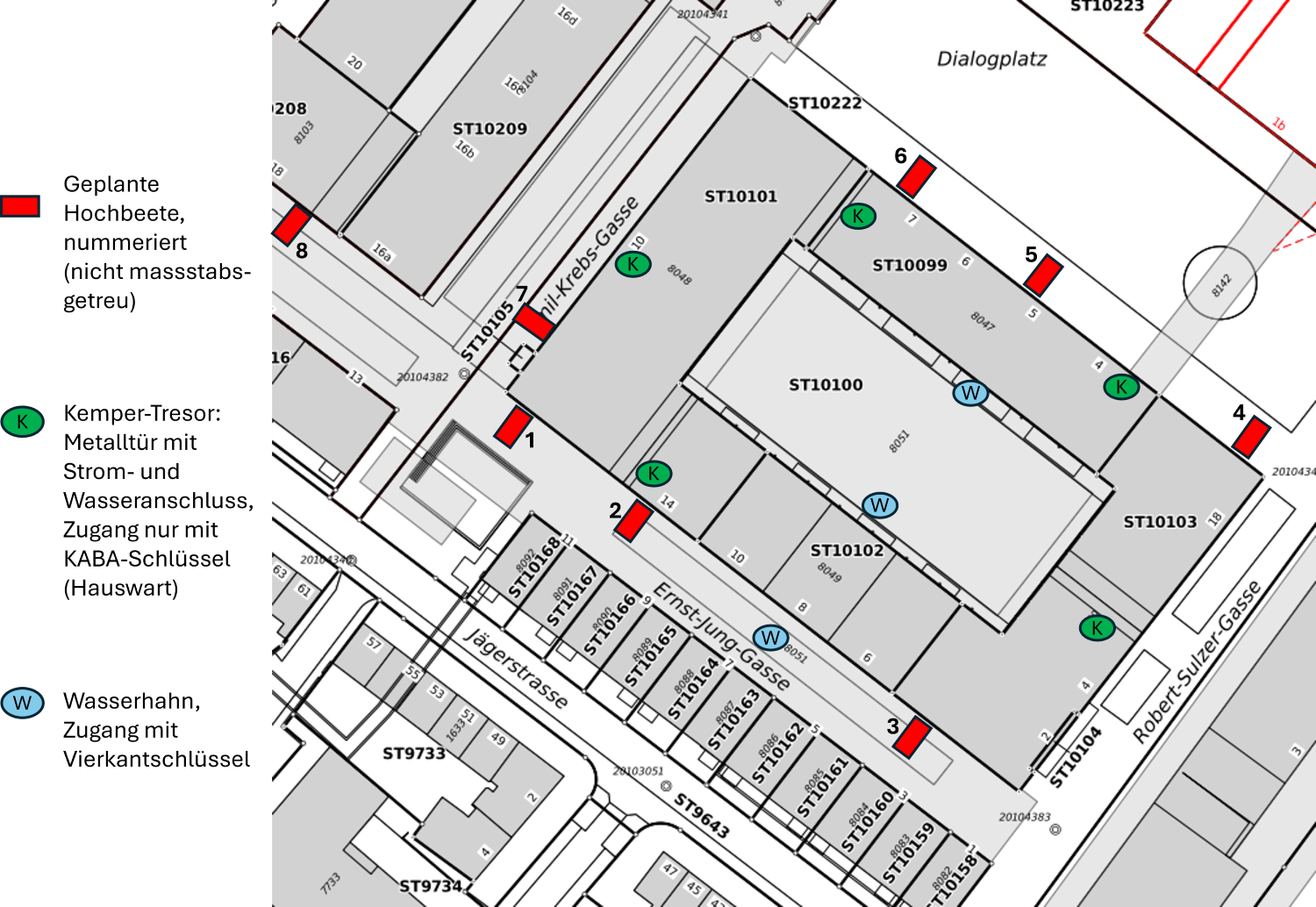
Planned locations for the raised beds (red rectangles)
The raised beds will have the dimensions 84 cm deep, 124 cm wide, 65 cm high. On the plan, they are shown larger and labelled with a number.